- Initial healing: 1 to 2 weeks for gums to close
- Osseointegration: 3 to 6 months for bone fusion
- Full healing: Complete when the final crown is placed
The complete dental implant recovery timeline spans three to six months, culminating in full osseointegration and crown placement. Initial healing takes just one to two weeks, during which swelling and mild discomfort subside. Understanding these crucial healing stages ensures proper care, prevents complications, and guarantees a successful, permanent smile restoration.
Contents:
- Что важно учесть: recovery Stages at a Glance
- Что важно учесть: the First 24 to 48 Hours After Implant Surgery
- Что важно учесть: day-by-Day Recovery Guide for the First Week
- Что важно учесть: weeks 2 to 6: Soft Tissue Healing and Early Bone Response
- What Affects How Fast an Implant Heals?
- When Can You Eat Normally, Exercise, and Return to Work?
- Typical Recovery Timeline by Case Type
- Expert View: Why Patience Matters During Osseointegration
- Цена, сроки и что пациент получает на старте лечения
- Что входит в стоимость и от чего реально зависит итоговая цена
- Мини-кейс: как выглядит решение на реальном клиническом сценарии
- Conclusion
Что важно учесть: recovery Stages at a Glance
Understanding the healing process is crucial for a smooth initial recovery. Whether you are reviewing a day-by-day guide or a week-by-week guide, knowing what to expect can help you prepare, especially when considering the overall dental implant cost and procedure in New York .
| Healing Stage | Timeframe | Expected Symptoms | Activity Level | Diet | Typical Milestones |
|---|---|---|---|---|---|
| Immediate Post-Op | First 24-48 hours | Minor bleeding, swelling, discomfort | Strict rest | Cool liquids, very soft foods | Blood clot formation |
| Early Healing | Days 2-7 | Peaking swelling, mild bruising | Light activity, no heavy lifting | Soft foods (mashed potatoes, yogurt) | Initial gum tissue closure |
| Bone Integration | Weeks 2-6 | Symptoms subside completely | Return to normal routine | Gradual return to regular diet | Stitches dissolve, soft tissue heals |
| Full Osseointegration | Months 3-6 | None | Unrestricted | Normal diet | Implant fully fuses with jawbone |
| Final Restoration | Month 6+ | Slight pressure from new crown | Unrestricted | Normal diet | Final crown placement |
Что важно учесть: the First 24 to 48 Hours After Implant Surgery
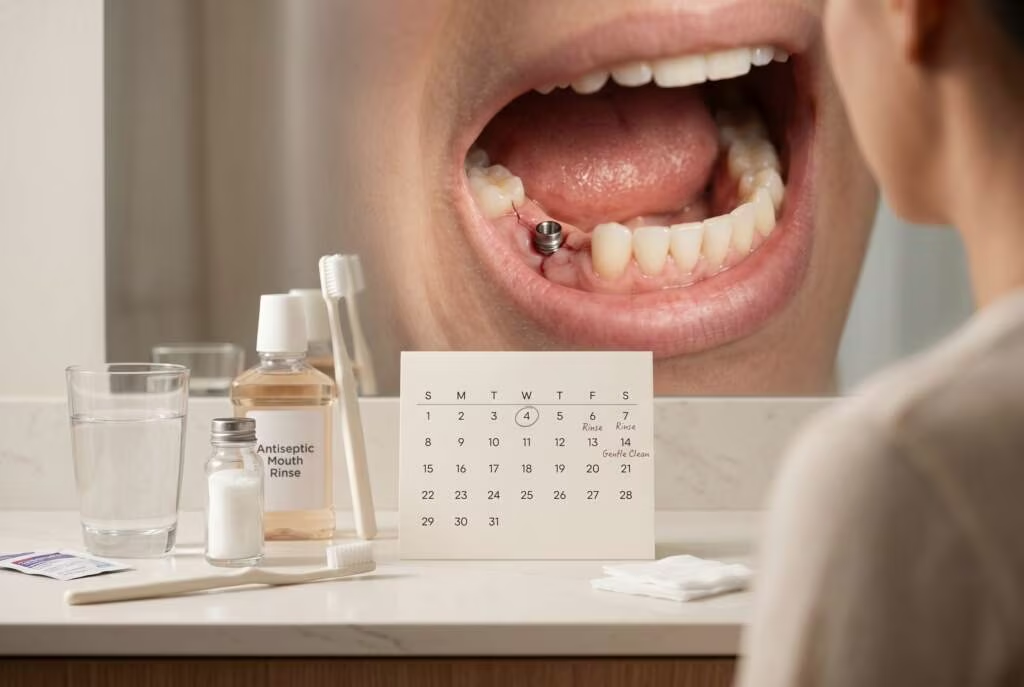
The first 24 to 48 hours after dental implant surgery can make or break your entire recovery — everything that happens in this window determines whether your implant succeeds or fails long-term. Nearly 80% of patients deal with swelling around the surgical site during this stretch, alongside discomfort that typically lands between 4 and 6 on a pain scale. Some bleeding? Completely normal. The one job that matters most right now is protecting the blood clot that forms at the implant site — because that clot is the only thing standing between you and dry socket or infection.
Rest isn’t optional. For the first 48 hours, strenuous activity is off the table entirely. Keep your head elevated — even while sleeping — and work ice packs on your outer jaw in 20-minute cycles to beat back the swelling. Hydration matters too, but here’s where people trip up: no straws. Not even once. The suction is enough to rip that clot right out, and dry socket hits 2–5% of cases where clot integrity gets compromised. Cool or lukewarm water, drunk normally. Yogurt, mashed potatoes, smoothies eaten with a spoon — that’s your menu for now. Simple. Boring. Non-negotiable.
According to Envision Dental Implants, recovery moves through four well-defined stages: the hyper-sensitive 24–48 hour window, early healing from days 3 through 14, bone integration running from 2 to 6 weeks, and full osseointegration completing anywhere between 2 and 6 months. Knowing this timeline matters because it resets your expectations. Mild swelling, slight bleeding, and some aching in the first two days? That’s your body working exactly as it should. But severe or worsening pain past the 48-hour mark, a fever, or swelling that migrates beyond the jaw? Call your surgeon. Don’t wait. Don’t Google it first.
Medication compliance in these first hours shapes everything that follows. Most oral surgeons prescribe a combination of anti-inflammatories and antibiotics — a protocol that 2025–2026 practices are increasingly fine-tuning to cut infection risk during this fragile early phase. Worth noting: upper jaw implants tend to cause more pronounced swelling than lower jaw procedures, simply because maxillary bone density is lower. If your implant is up top, be extra disciplined about following post-op instructions. Take your medications on schedule, keep oral hygiene gentle and away from the surgical site, and after the first 24 hours, rinse carefully with warm saltwater. These aren’t suggestions — they’re the foundation protecting every dollar you put into this procedure.
Что важно учесть: day-by-Day Recovery Guide for the First Week
Following a structured daily routine is essential for a smooth recovery during the first week. As noted by Riverwalk Dental Care, which describes the 1-2 weeks post-surgery recovery process where full initial healing occurs by week two, these practical actions will help protect your implant and promote healing:
- Rest with your head elevated on extra pillows, especially when sleeping, to minimize swelling and bleeding.
- Apply ice packs to the affected side of your face in 15-minute intervals during the first 24 to 48 hours.
- Eat a strict soft-food and liquid diet, choosing nutrient-rich options like smoothies, yogurt, and lukewarm soups.
- Rinse your mouth gently with warm salt water starting the day after surgery, being careful not to spit forcefully.
- Avoid strenuous physical activities, heavy lifting, and intense exercise for the entire first week to prevent throbbing and bleeding.
- Take all prescribed pain management medications and antibiotics exactly as directed by your dental professional.
- Maintain your oral hygiene by carefully brushing your adjacent teeth while strictly avoiding the surgical site.
Что важно учесть: weeks 2 to 6: Soft Tissue Healing and Early Bone Response
Between weeks 2 and 6 after implant placement, your gums look healed, you feel almost human again — and that’s exactly when most people make the mistake that costs them everything. The soft tissue closes fast. Tenderness drops. By day 5, many patients are back at light work, taking gentle walks, feeling like the hard part is over. It isn’t. Underneath that calm surface, the titanium post sits in your jawbone with zero structural fusion — osseointegration, the actual bone-bonding process, hasn’t even hit its stride yet. That takes 3 to 6 months. Not 3 to 6 weeks. Months.
The gap between «feels fine» and «actually fused» is where implants fail. As Aspen Dental documents, initial soft tissue healing wraps up in 1–2 weeks — but osseointegration runs its full course over 3 to 6 months, shaped heavily by your bone density and systemic health. During weeks 2 to 6, the jaw tissue is only beginning to form a biological bond with the titanium surface. You feel nothing. No signal, no sensation, no warning. The site can feel completely normal while the bone is still in its earliest response phase. Bite down too hard, take a hit in contact sports, put any real mechanical stress on that implant — and micro-movement interrupts integration. Silently. Permanently.
Diet and lifestyle aren’t suggestions during this window. They’re load-bearing. Hydration, soft foods, saltwater rinses — these reduce bacterial load at the gumline and give soft tissue the conditions it needs to stay stable. Lower jaw implants tend to integrate faster, often finishing in 3 to 5 months, because cortical bone density there is simply greater than in the upper jaw, where 6 months is a realistic ceiling. Smokers and patients managing diabetes face roughly double the failure risk — around 10% versus the general 5% — because systemic factors directly suppress the bone remodeling activity this phase depends on.
Pain-free does not mean ready. Implant stability gets confirmed through clinical evaluation, digital imaging, and — in many New York practices — 3-month scans that verify integration before the abutment even gets placed. Not by how you feel on a Tuesday morning. A single implant in New York runs $3,000 to $6,000 including monitoring visits. That’s the investment on the line every time someone decides comfort means clearance. Follow your provider’s protocol exactly through weeks 2 to 6, don’t rush the return to normal, and long-term outcomes improve sharply — with peri-implantitis and late-stage failure becoming far less likely. The bone is doing its work. Let it.
What Affects How Fast an Implant Heals?
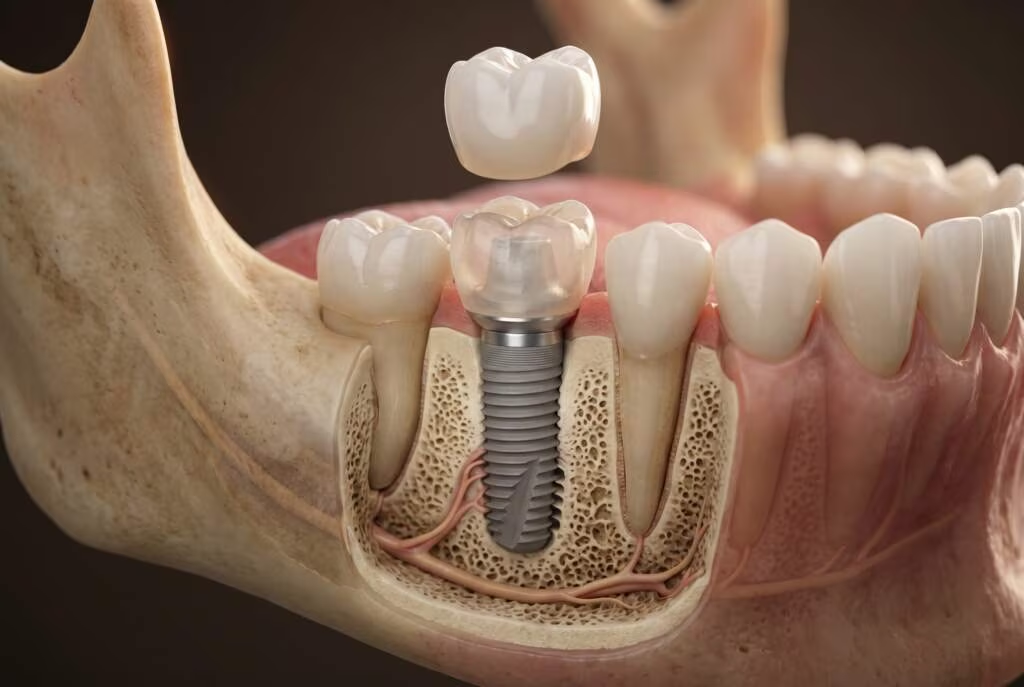
Osseointegration — the biological lock between implant and jawbone — takes three to six months, and that gap isn’t arbitrary: it’s the difference between your bone density, your bloodwork, and whether you’ve smoked a cigarette since the surgery. Healing here isn’t mechanical. It’s deeply personal. Two patients, same implant, same surgeon — completely different timelines. Why? Because bone doesn’t fuse on a schedule. It fuses on biology.
Bone quality drives everything. Dense, well-vascularized bone grabs the implant fast and holds it hard. Porous, depleted bone — common after years of tooth loss, age-related changes, or osteoporosis — does the opposite. These patients often need a bone graft before the implant even goes in, sometimes at the same time as placement. That graft has to integrate first. Only then can the implant begin doing its job. The total timeline stretches, sometimes by months. As Aspen Dental points out, soft tissue closes up in one to two weeks — that part looks deceptively fast — but the deeper osseointegration process runs three to six months and is tightly bound to bone health and systemic condition. The outside heals. The inside is still working.
Systemic health is where things get complicated. Uncontrolled diabetes blunts bone remodeling. Autoimmune disorders create chronic low-grade inflammation that competes with the healing signal. Poor circulation means the implant site is essentially working with a restricted blood supply — the very thing bone regeneration depends on. Smoking is the most documented saboteur in the literature: it constricts blood vessels, suppresses immune function, and dramatically raises the probability of implant failure. Not «slightly raises.» Dramatically. Bisphosphonates and corticosteroids add another layer — they interfere with bone metabolism at a cellular level and require serious pre-surgical evaluation, not a checkbox on an intake form.
The treatment design itself matters more than most patients realize. Anterior implants — front of the jaw, denser bone — tend to achieve stability faster than posterior placements, where bone structure is often more variable. Surface texture of the implant, surgical technique, and the decision between immediate and delayed loading all shift the outcome. But here’s the part no protocol document mentions clearly enough: patients who actually follow post-operative instructions — who clean the site properly, show up for follow-ups, and stop biting down on things they shouldn’t — consistently heal better. Osseointegration is a two-way agreement. The surgeon does their part. Then it’s on you.
When Can You Eat Normally, Exercise, and Return to Work?
Two to five days — that’s how long it takes most patients to get back to a desk job after dental implant surgery. But full recovery, where you’re eating normally and hitting the gym without a second thought, plays out over weeks, sometimes months. The healing unfolds in real, distinct stages. The first one to two weeks are all about gum tissue closing around the implant site — and this is where most people make their first mistake. They feel fine on day three and decide to go for a run. Don’t. Any activity that spikes your blood pressure can restart bleeding and wreck the healing clot you spent days building. Gentle saltwater rinses and careful brushing around the implant site start from day one. No exceptions.
The diet timeline is equally unforgiving. For the first 24 to 48 hours, you’re living on yogurt, mashed potatoes, and smoothies — and skip the straw, because the suction pressure alone can dislodge a clot. By weeks three and four, most patients can handle a broader menu. Hard, crunchy, or sticky foods, though? Those stay off the table until osseointegration is confirmed — that’s the slow, silent process where bone actually fuses to the implant surface. As the team at Riverwalk Dental Care explains, the surface-level gum healing wraps up around the two-week mark, but the deeper bone bonding continues for three to six months. One structural detail worth knowing: lower jaw implants tend to finish osseointegration in three to five months, while upper jaw placements can stretch to six — denser bone below, more porous bone above.
Getting back to exercise requires cold discipline. Light walking? Fine by day five. The gym, barbell work, high-impact cardio? Wait at least two weeks, and ideally until your oral surgeon clears you in person. This isn’t excessive caution — micro-movement of the implant during early osseointegration is a real failure mechanism, and strenuous effort is one of its primary causes. Smokers face a rougher road: research links smoking to healing delays of up to 50%, pushing implant failure rates from roughly 5% all the way to 10%. And patients who ignore the soft diet recommendation run infection risks in the 10 to 15% range, which can push total recovery out to nine months. Nine months. For a shortcut that wasn’t worth it.
Expectations matter here. Office workers are typically back at their desks within a week. People in physically demanding jobs should plan on two to three weeks before returning to full duties. Full-mouth reconstructions are their own category — a six-to-nine-month process, with temporary prosthetics worn throughout. The single variable you actually control across all of this is compliance: consistent gentle brushing, prescribed rinses, and showing up to every follow-up appointment. That’s what separates patients who hit full implant function at four months from those still troubleshooting at six. Get that part right, and the implant does the rest.
Typical Recovery Timeline by Case Type
Understanding the recovery process is essential for planning your dental implant journey. The timeline varies significantly depending on the complexity of the procedure, such as whether a bone graft is required, if a temporary crown is placed immediately, or if the implant is positioned in the upper versus lower jaw to achieve full healing.
| Case Type | Estimated Timeline | Key Milestones |
|---|---|---|
| Standard Implant (Lower Jaw) | 3 — 4 months | Initial surgery healing (up to 2 weeks), osseointegration, and final crown placement. |
| Standard Implant (Upper Jaw) | 4 — 6 months | Requires slightly longer osseointegration due to softer bone density in the maxilla. |
| Implant with Bone Graft | 6 — 9+ months | Additional time needed for the bone graft to fuse and stabilize before or during implant placement. |
| Immediate Loading | 3 — 6 months | Placement of a temporary crown on day one, followed by standard healing for the permanent restoration. |
| Full-Mouth Treatment | 6 — 8+ months | Comprehensive healing across multiple sites, including 6 weeks post-second surgery for final prosthetics. |
Источник данных: Heartwell Dental — Notes 2 weeks max for initial surgery healing, 3-6 months osseointegration, 6 weeks post-second surgery for crown.
Expert View: Why Patience Matters During Osseointegration
Soft tissue around a dental implant can look perfectly healed within weeks — but that visible closure is a biological red herring, masking a deeper process that no technology, no supplement, and no impatient patient can safely rush. The gum seals. Patients feel fine. And right there, in that false sense of completion, is where most implant failures are quietly set in motion. Because while the surface recovers in one to two weeks, the real work — osseointegration, the microscopic fusion of titanium with living jawbone — hasn’t even reached its midpoint.
As specialists at Modern Haus Dental make clear, the timeline breaks into hard stages: soft tissue closure in weeks one through two, then three to six months of osseointegration before a crown can go anywhere near that site. And that window isn’t arbitrary — it’s driven by bone density, systemic health, and anatomy. The lower jaw, with its denser mandibular bone, can complete integration in as little as three to five months. The upper jaw needs closer to six. Add diabetes or a smoking history into the equation, and implant failure rates climb from roughly five percent in healthy patients to as high as ten — not because of bad luck, but because biology doesn’t negotiate.
Among periodontists and oral surgeons, the consensus isn’t nuanced. It’s blunt. Osseointegration quality is the single most reliable predictor of whether an implant lasts a decade or fails in two years. Load a crown onto an implant before bone integration is confirmed — typically through digital X-rays or 3D imaging at the three-month mark — and you introduce micromotion. Micromotion triggers bone resorption. Bone resorption means the implant fails. Then you’re looking at extraction, a waiting period, and starting over. New York practices have absorbed this lesson hard: follow-up protocols now routinely include digital scans at three months specifically to catch premature loading before it becomes irreversible damage. New York Public Health Law even mandates explicit disclosure of these osseointegration risks during informed consent, because wishful thinking from patients is, clinically speaking, its own hazard.
Immediate loading implants and PRP-enhanced therapies are real, and they’re gaining ground — in the right candidates, with ideal bone conditions. Some projections put biologics on track to shave roughly a month off average recovery by 2026. But these remain exceptions. The standard two-stage procedure still dominates, and for good reason: it works. Reliably. Every time. Full osseointegration for a single implant runs three to six months. Full-mouth reconstructions run six to nine. That’s not a flaw in modern implant dentistry. That’s the whole point of it.
Цена, сроки и что пациент получает на старте лечения
Dental implants take 3 to 6 months from surgery to final crown — and cost anywhere from $1,500 to $6,000+ per implant, depending on your bone condition, materials chosen, and whether any prep work is needed before the implant even goes in. That range isn’t vague pricing — it reflects genuinely different clinical realities. A single implant in a patient with solid bone is almost a different procedure from a full-arch case requiring staged bone grafting and multiple surgeries.
So what actually happens during those months? The first two weeks are pure recovery: swelling drops, stitches dissolve, soft foods only. Then comes the phase that cannot be negotiated — osseointegration, weeks 3 through 12, where the titanium post fuses to the jawbone at a biological pace. No shortcuts. Once imaging confirms the fusion is complete, the abutment goes in, impressions are taken, and the final crown arrives within 2 to 4 more weeks. Most patients aren’t bothered by the physical discomfort — that’s manageable. What actually frustrates them is walking into treatment without a clear cost breakdown or realistic timeline. That uncertainty is avoidable.
A clinic worth trusting will hand you three things at the first appointment: a 3D CBCT scan assessing your bone volume, a written treatment plan with costs broken down by stage, and a realistic appointment schedule. Ask upfront whether the consultation fee gets folded into the total if you proceed — many practices do this, and not asking is how patients end up surprised by an extra charge. If your bone density comes back insufficient, grafting enters the picture. That adds $300 to $3,000 to the bill and another 3 to 6 months to the timeline. Better to know in week one than week eight.
The actual next step isn’t browsing before-and-after galleries. It’s booking a proper diagnostic consultation — with imaging, not a five-minute «free assessment.» Patients who show up with real questions — about bone health, implant brands, warranty terms, payment plans — consistently end up more satisfied with their outcomes. Not because they spent more, but because they decided with full information rather than reacting to the lowest quote they saw online. If cost is a real constraint, ask directly about phased treatment or payment plans. Most reputable clinics offer both. Quality and accessibility aren’t mutually exclusive — you just have to ask.
Что входит в стоимость и от чего реально зависит итоговая цена
Dental implant pricing is a layered puzzle — and clinics are counting on you not to look too closely at the pieces. The base quote you see advertised covers the implant post. Full stop. Everything else — the abutment, the crown, pre-surgical CT scans, X-rays, anesthesia, bone grafting, extractions — sits in a separate column that many providers prefer to reveal only after you’re already committed. Break the cost down component by component. That’s the only honest way to compare what clinics are actually charging.
The variables that genuinely drive price are fewer than you’d think. Implant material (titanium vs. zirconia), brand (generic vs. premium systems like Straumann or Nobel Biocare), your bone structure, and the clinic’s location — those four factors explain most of the variation you’ll encounter. Need bone augmentation before the implant can even go in? Add $500–$3,000 to whatever number you were quoted. Healthy bone, single tooth, straightforward case? You’ll land at the lower end of the range. Guided placement technology — digital planning, robotic assistance — adds cost, too. But here’s the thing: that premium often buys measurably better precision and fewer complications. Sometimes paying more upfront is the cheaper outcome.
What catches patients completely off guard is how long this process actually runs. Experts at Modern Haus Dental are clear on the timeline: gum tissue closes in the first 1–2 weeks, but osseointegration — the implant physically fusing with your jawbone — takes 3 to 6 months. Months. That means follow-up visits, temporary restorations, and any mid-healing adjustments are all live cost items. Clinics offering a single all-inclusive fee are giving you real transparency. Clinics billing each appointment separately can quietly push your actual total far above that original number before you realize what happened.
So before you sign a single thing, demand an itemized written estimate. Line by line: the implant fixture, the abutment, the crown, imaging, surgical placement, anesthesia, and every follow-up visit through the first year. A clinic with nothing to hide hands you that list without blinking. A clinic that hedges or vagues its way through the question is telling you something important. Remember — given that the recovery timeline stretches across months, you’re not just choosing a price. You’re choosing a partner for the long haul. Choose accordingly.
Мини-кейс: как выглядит решение на реальном клиническом сценарии
When a fractured molar breaks below the gumline, every day of waiting means more pain, more bone loss, and fewer good options on the table. This 47-year-old patient knew it. Chronic aching on her left side, chewing only on the right — her upper molar had essentially checked out. Her oral surgeon confirmed what the X-rays already suggested: extraction, then a single implant. No grafting needed. Bone density was solid. That meant one thing — immediate placement the same day as the pull, and a clean, predictable dental implant recovery timeline from hour zero.
The whole surgical appointment ran 90 minutes. Local anesthesia, no drama. The first week looked exactly like it should — mild swelling, some tenderness, ibuprofen and soft foods doing their job quietly in the background. By week two, the soft tissue was closing up nicely and the patient was barely reaching for painkillers. Then came the long game: osseointegration. Three to four months of the titanium post slowly, stubbornly fusing with living jawbone — a biological process you simply cannot rush. Check-ups at weeks two, six, and twelve kept everything on track.
Four months post-surgery, impressions went out for a custom porcelain crown. Two weeks after that, it was seated. Total time from extraction to a fully functional tooth: roughly 4.5 months. The patient chewed without hesitation, reported zero sensitivity, and loved the result. Radiographic confirmation showed perfect bite alignment. Case closed — no second procedures, no complications.
What made this work? Three things. Healthy bone volume that skipped the grafting stage entirely. A patient who actually followed post-operative instructions — soft diet, meticulous hygiene, no cigarettes. And a treatment plan built around her specific anatomy, not a generic protocol pulled off a shelf. Bone grafting requirements, implant location, or systemic health issues can stretch this timeline dramatically. That’s precisely why a cookie-cutter approach fails so many candidates, and why individualized planning isn’t a luxury — it’s the whole point.
Conclusion
Dental implant recovery isn’t a waiting game — it’s a biological process with real stakes, and every phase from week one through month six exists for a reason you can’t negotiate away. Gum tissue closes in the first 1-2 weeks. Then osseointegration takes over — and that window, spanning 3 to 6 months, is where titanium either becomes bone or becomes a problem. Denser lower-jaw bone can compress fusion down to around 3 months. Full-mouth reconstruction? You’re potentially looking at 6-9. The biology doesn’t care about your schedule.
Post-surgery care is the actual procedure. Not the surgery — what you do after. The soft diet, the saltwater rinses, the follow-up imaging, the decision not to smoke. That last one matters more than most patients realize: smoking pushes implant failure rates up by as much as 50%. As periodontists at Aspen Dental point out, bone health accounts for roughly 80% of timeline variance. Translation: your compliance and systemic health outweigh every piece of technology in the clinic. Place the crown before osseointegration is complete, and you’re gambling the entire investment on a shortcut.
So what does a realistic arc actually look like? Around day 5, most patients are back to light activity. Weeks 3-4 bring a return to normal eating. Full osseointegration lands somewhere between months 3 and 6 — depending on jaw location, bone density, and your overall health picture. Digital scans at 3-month intervals now confirm integration with precision, and teledentistry platforms help bridge the gaps between visits. Useful tools. But they don’t compress biology. Peri-implantitis, micro-movement, extended soreness — trace almost any complication back far enough, and you’ll find a gap in post-surgery care, not a surgical error.
Patience here isn’t a virtue. It’s a clinical requirement. Osseointegration is the mechanism by which a titanium post stops being a foreign object and starts being a tooth root — one capable of lasting decades. Whether your timeline runs 3 months or 9, each milestone cleared is structural progress. Communicate with your periodontist at every check-up. Stay consistent. And understand that the time you put into healing properly is not a cost — it’s the investment that makes the result permanent.
Free Consultation
Ready to discuss your dental implant recovery and healing timeline? Book your free consultation today to get a personalized treatment plan.
Useful if you want to understand timing, stages, and budget before starting treatment.
Frequently Asked Questions
How long does the full dental implant recovery process take?
The complete dental implant recovery timeline typically spans 3 to 6 months. The initial healing of soft tissue takes about 1 to 2 weeks, while osseointegration — the process of the implant fusing with the jawbone — requires 3 to 6 months depending on individual bone density and overall health.
What can I expect during the first week after dental implant surgery?
During the first week, it is normal to experience swelling, bruising, and mild to moderate discomfort around the implant site. Most patients manage pain with prescribed or over-the-counter medications. A soft food diet is strongly recommended, and you should avoid smoking, alcohol, and strenuous physical activity to support proper healing.
When can I return to normal eating habits after getting a dental implant?
Patients are generally advised to stick to soft foods for the first 2 to 4 weeks following implant placement. Gradually introducing harder foods is recommended only after the dentist confirms that healing is progressing well. Full return to a normal diet is usually possible after the crown is placed and osseointegration is complete.
What factors can affect the dental implant healing timeline?
Several factors influence how quickly you heal after dental implant surgery, including your age, bone quality and density, overall health, smoking habits, oral hygiene practices, and whether additional procedures such as bone grafting were performed. Patients with diabetes or immune system conditions may experience a longer recovery period.
How do I know if my dental implant is healing properly?
Signs of proper healing include gradually decreasing swelling and discomfort within the first two weeks, no persistent bad taste or odor, and the absence of excessive bleeding. Your dentist will schedule follow-up appointments to monitor osseointegration through X-rays. If you notice increasing pain, implant mobility, or signs of infection, contact your dental provider immediately.