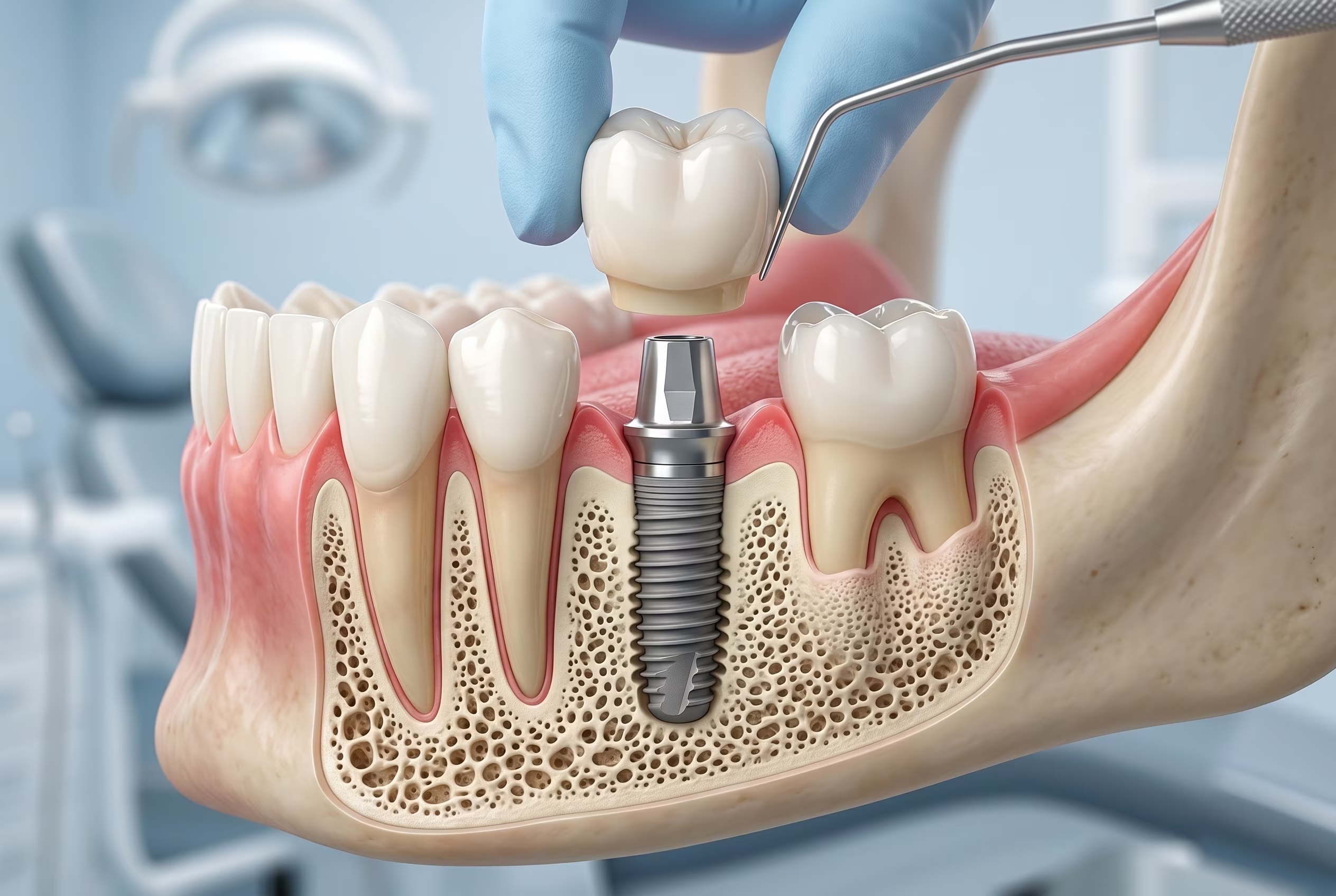
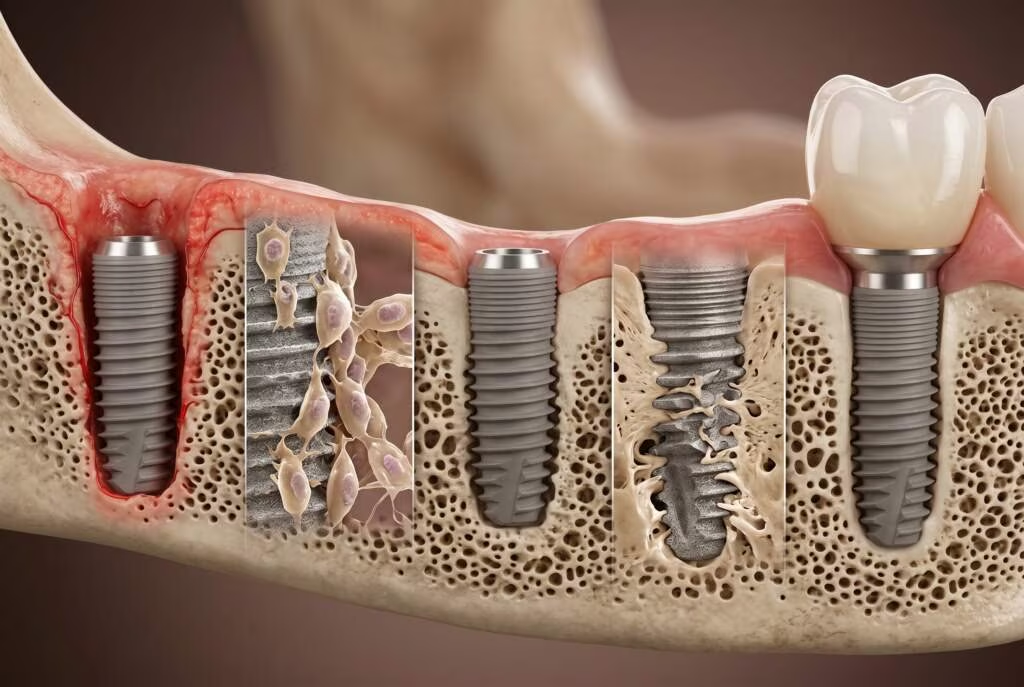
- Surgical placement: Initial insertion of the titanium post into the jawbone
- Gum healing: Soft tissue recovery taking approximately 1 to 2 weeks
- Osseointegration: Crucial bone fusing phase lasting 3 to 6 months
- Crown placement: Final attachment of the artificial tooth completing the process
The dental implant healing stages span from initial surgery to final crown placement, typically taking three to six months. This recovery timeline depends on individual bone health and osseointegration, where the jawbone fuses with the titanium post. Proper care during the healing process ensures a stable foundation for your new artificial tooth, preventing complications after dental implant surgery.
Contents:
- How long does recovery usually take?
- Stage-by-stage healing timeline
- The first 48 hours after surgery
- How should you care for the implant site at home?
- Why osseointegration takes months
- When is healing not going as planned?
- What can speed healing up or slow it down?
- What do specialists want patients to understand most?
- How costs can change during the healing period
- Mini case: what the solution looks like in a real clinical scenario
- Conclusion
How long does recovery usually take?
Recovery after dental implants moves through four distinct phases — from the first 48 hours of raw surgical aftermath to the six-month mark when the final restoration finally goes in. Knowing what each stage actually demands separates patients who sail through the process from those who undermine it with avoidable mistakes. And to understand why healing unfolds the way it does, it helps to first get clear on how dental implant surgery works and what the body endures during placement.
Phase one: the first 24 to 48 hours. This window is brutal, and it sets the tone for everything that follows. Swelling peaks, bleeding needs controlling, and discomfort is real. Gum tissue starts closing around the implant site almost immediately — the biology kicks in fast even when the patient feels anything but fine. Ice packs, rest, no hot food. Simple rules, non-negotiable execution. The blood clot that forms in this window is not a nuisance — it’s the biological foundation of the entire repair process. Disturb it, and you’re in trouble. From day 3 through day 14, gum tissue continues knitting together, sensitivity slowly backs off, and infection becomes the dominant risk. A soft diet and meticulous oral hygiene aren’t optional at this stage. They’re the job.
Weeks 2 through 6 mark the shift from soft-tissue recovery into something deeper. As Envision Dental Implants specialists make clear, this is when initial bone integration begins — the jawbone starts actively growing around and fusing with the titanium post. That process, osseointegration, reaches completion somewhere between months 2 and 6. This is the mechanism that makes implants categorically different from every other tooth replacement option. The implant doesn’t sit on tissue. It becomes part of the skeletal structure. That’s not marketing language — that’s bone biology.
Final stabilization and restoration placement happen only after X-rays and clinical evaluation confirm osseointegration is complete. Bone density, general health, smoking history, and how closely a patient follows post-operative protocols all dictate the pace. Disciplined patients — soft diet maintained, hygiene consistent, follow-ups attended — often hit the restoration stage around month four. Others need the full six. Either way, patience here isn’t passive waiting. It’s an active, deliberate investment in a result built to last decades.
Stage-by-stage healing timeline
Understanding the dental implant cost and procedure involves knowing what to expect during recovery. The timeline below outlines the healing stages, from the initial surgery at the dental implant site to the final crown placement, detailing how the soft tissue and surgical site recover over time.
| Healing Stage | Expected Duration | Biological Changes & Symptoms | Patient Restrictions |
|---|---|---|---|
| Initial Surgery | 1–3 days | Blood clotting, minor bleeding, and initial swelling at the surgical site. | Rest, soft diet, avoid spitting or vigorous rinsing. |
| Soft Tissue Healing | 1–2 weeks | Gums close over the dental implant site; bruising and swelling subside. | Gentle brushing, avoid hard or spicy foods. |
| Osseointegration | 3–6 months | Jawbone fuses with the implant; critical for long-term stability. Usually painless. | Maintain excellent oral hygiene, avoid excessive chewing force. |
| Abutment Placement | 1–2 weeks | Soft tissue heals around the newly placed abutment. | Soft diet around the specific area, gentle cleaning. |
| Crown Placement | Ongoing | Final restoration attached; full function and aesthetics restored. | Regular dental check-ups, treat like a natural tooth. |
The first 48 hours after surgery
The first 48 hours after dental implant surgery will make or break your recovery — this is when pain peaks, swelling sets in, and your body decides whether to accept the implant or fight it. The body launches a full inflammatory response almost immediately, and that’s not a problem — that’s osseointegration starting. Still, roughly 60–70% of patients report moderate discomfort during this window even with proper medication on board. Know what’s normal, act on it correctly, and you dramatically cut your risk of complications down the line.
Cold. Rest. Elevation. These three things carry more weight in the first 24 hours than most people realize. Apply cold packs to your cheek in 20-minute cycles — on, off, repeat — to blunt swelling before it builds. Your dentist will likely prescribe analgesics or point you toward NSAIDs like ibuprofen; take them on schedule, not just when the pain becomes unbearable. Physical exertion is off the table — it spikes blood pressure, which feeds both bleeding and swelling. Keep your head elevated even while sleeping. Some bleeding in the first 24 hours is completely expected, showing up in about 15–20% of cases — bite down gently on the gauze pads and let them do their job.
As outlined by Envision Dental Implants, these first 24–48 hours are just stage one of four distinct recovery phases, each demanding its own protocol. Right now, your diet is simple: cool liquids, very soft foods, nothing hot, nothing hard, nothing crunchy. Full stop. Oral hygiene gets scaled back to almost nothing — no vigorous rinsing, no spitting, zero actions that could dislodge the blood clot forming at the surgical site. A saltwater rinse only enters the picture if your clinician specifically approves it, and not before the 24-hour mark.
Knowing what’s wrong matters just as much as knowing what’s right. Swelling that gets dramatically worse after day two, a fever, pus, unusual discharge, or pain that intensifies instead of fading — these are red flags for early infection, which hits 5–10% of implant patients and needs clinical attention fast. Smoking during this phase is particularly brutal: it can slash bone healing capacity by up to 50% and sends implant failure risk through the roof. Patients who rest, ice consistently, take their medications, and stay away from tobacco and alcohol in these first two days give their implants the strongest possible foundation for long-term success.
How should you care for the implant site at home?
Proper home care is essential to protect early healing and ensure minimal discomfort after your procedure. As highlighted by Lasting Smiles in their day-by-day recovery guide, the osseointegration phase typically lasts 3–6 months, making daily maintenance crucial for success.
- Maintain a soft diet during the initial recovery phase to prevent unnecessary pressure on the surgical area.
- Avoid straws completely, as the suction created can dislodge blood clots and disrupt the early healing process.
- Prioritize strict oral hygiene by gently brushing and using prescribed rinses to keep the site clean and free from infection.
- Cease smoking immediately, as tobacco use severely restricts blood flow and is a primary factor in implant complications.
- Restrict strenuous physical activities and heavy lifting for the first few days to keep blood pressure stable and minimize bleeding.
Why osseointegration takes months
Osseointegration cannot be rushed — bone grows onto a dental implant surface at its own biological pace, and that pace demands 3–6 months, full stop. This isn’t clinical overcaution. It’s the minimum threshold for bone tissue to adhere, proliferate, and mechanically lock around the implant with enough integrity to support a permanent restoration. Push the timeline and you don’t accelerate cellular activity — you simply destroy the conditions that make integration possible.
The process starts at the microscopic level the moment the implant is placed. A blood clot forms. Osteoblasts — bone-forming cells — migrate in and begin depositing new bone matrix directly onto the implant’s textured titanium surface. This contact must be extensive, undisturbed, and progressive. Lower jaw implants typically finish 1–2 months faster than upper jaw implants — denser mandibular bone provides better initial stabilization and a stronger vascular supply. When natural bone volume falls short, grafting extends the entire window to 4–12 months, because the graft itself must integrate before osseointegration can even begin. As The Dental Implant Place explains, CT imaging can track this bone growth in real time, giving clinicians hard objective data before any restoration work starts — not guesswork, actual evidence.
Cut corners here and the consequences are expensive. Osseointegration failure hits 2–5% of implants under normal conditions. Smoke during healing? That rate doubles or triples. Violate post-op protocols — hard foods, intense exercise, poor oral hygiene — and failure risk jumps another 30–50%. Infection during the healing window, which affects 5–10% of cases, can derail bone integration entirely, requiring antibiotics or surgical revision and tacking on another 2–4 months. A failed implant requiring removal and replacement runs $2,000–$4,000 on top of what was already spent. The 3–6 month window isn’t a suggestion. It’s economics and biology speaking at the same time.
No serious implantologist will tell you the timeline can be safely compressed for the average patient. Immediate loading protocols — temporary prosthetics placed within days of surgery — do exist, but they’re strictly conditional on exceptional bone density and surgical precision. They don’t speed up bone growth. They just manage it differently under very specific circumstances. Bioactive implant coatings may eventually bring osseointegration time down to 2–3 months in select cases, and AI-enhanced CT analysis is moving toward personalized healing predictions. But right now, the expert consensus holds firm: follow the 3–6 month standard, and long-term success rates stay consistently above 95%. Disregard it, and you’re gambling with biology — and losing is expensive.
When is healing not going as planned?
Dental implant healing can go sideways fast — and knowing the warning signs early is the only thing standing between a successful result and a full implant failure. Yes, some swelling, tenderness, and light bleeding in the first 48 to 72 hours is completely expected. But symptoms that intensify instead of fading, or that simply refuse to go away? That’s your body sending a signal you cannot afford to ignore. Catching a minor setback before it snowballs into bone loss or implant rejection is entirely possible — if you know what to look for.
The most urgent red flag: fever, pus, or any unusual drainage from the implant site. These are textbook signs of infection. Peri-implantitis — a bacterial infection that colonizes the tissue directly around the implant — can silently eat through the surrounding bone until there is simply nothing left to hold the post in place. Equally alarming is persistent pain that moves in the wrong direction. Pain after implant surgery should follow one clear trajectory: steadily downward. If it starts climbing again after the first week, something has gone wrong beneath the surface. According to Envision Dental Implants, recovery unfolds across four distinct stages spanning up to six months — and at every stage, pain levels should be dropping, not spiking.
Feel any movement in the implant post? Stop and call your surgeon. That rocking, shifting, or subtle clicking sensation points directly to implant failure caused by incomplete osseointegration — the critical process where the titanium post physically fuses with the jawbone. A properly integrated implant doesn’t move. Period. Then there’s nerve damage, which can show up as lasting numbness, tingling, or a burning feeling in the lips, chin, gums, or tongue. Some nerve irritation right after surgery is normal. But if those sensations are still with you after a few weeks, you need a neurological evaluation — because the inferior alveolar nerve and surrounding structures don’t repair themselves without help, and waiting costs you time you don’t have.
A few more signs that should put you on the phone with your oral surgeon or periodontist immediately: a persistent bad taste or foul odor that brushing and rinsing can’t fix, visible gum recession that exposes the metal post, or swelling and bruising that seemed to improve — then came roaring back. Any one of these symptoms warrants urgent attention. All of them together? That’s an emergency. Early intervention dramatically increases the odds of saving the implant and keeps you out of the chair for bone grafting, extended antibiotic courses, or repeat surgery — the expensive, exhausting consequences that delayed treatment almost always demands.
What can speed healing up or slow it down?
Several factors can significantly influence the healing timeline of dental implants, from the initial consultation and planning stages to the final restoration of soft tissue and bone. Understanding these variables helps set realistic expectations for recovery.
| Factor | Impact on Healing Speed | Details |
|---|---|---|
| Upper vs. Lower Jaw | Faster in lower jaw | Lower teeth generally heal faster due to denser bone compared to the upper jaw. |
| Bone grafting | Slows down | Requires additional time for the graft to integrate before or during implant placement. |
| Smoking | Significantly slows down | Constricts blood vessels, delaying recovery and increasing the risk of implant failure. |
| Diabetes | Slows down | Uncontrolled diabetes impairs the immune response and slows osseointegration. |
| Oral Hygiene | Speeds up / Maintains | Excellent hygiene prevents infections and promotes optimal, uninterrupted healing. |
What do specialists want patients to understand most?
No implant technology on the market — no bioactive coating, no AI-guided surgery, no premium titanium — can override two brutal biological realities: your bone quality and whether you actually follow the rules after you leave the clinic. Leading implantologists are unambiguous about this. The 3–6 month healing window isn’t some bureaucratic waiting period invented by cautious dentists. It’s a biological floor — the minimum time bone cells need to physically fuse with an implant surface. Push that timeline without adequate bone density, and failure risk climbs 40–60% in compromised cases. That’s not a footnote. That’s a coin flip.
Surgical technique matters enormously, yes. Precision placement, minimally invasive approaches, sterile protocols — these all set the stage for stable osseointegration. But flawless surgery can’t save you from yourself. Non-compliance after the procedure — smoking, alcohol, skipping hygiene, biting into something hard too soon — drives complication rates up by 30–50%. Smoking alone cuts bone healing capacity in half and multiplies implant failure risk two to three times compared to non-smokers. Two patients, identical procedures, wildly different outcomes. The only variable? What they did when they got home.
Experts at Lasting Smiles make this point with structured, day-by-day recovery guidance that mirrors what clinicians see in practice: the difference between predictable healing and an avoidable setback almost always comes down to protocol adherence — from the first 24 hours straight through the full osseointegration period. In complex cases with bone grafting or compromised density, that window stretches to 12 months. Every single stage demands the same discipline. There’s no phase where you get to coast.
Here’s the hard truth patients need to hear before treatment even starts: osseointegration success is a shared responsibility, and the surgeon only owns half of it. The expertise and technique are theirs. The discipline to protect that investment for months afterward — that’s entirely yours. The industry is moving toward AI imaging and bioactive surfaces that may eventually compress timelines for select patients. Promising. Not yet here. For now, the 3–6 month biological standard holds firm. And specialists will tell you plainly: long-term implant success over a decade-plus correlates more strongly with patient behavior than with implant brand, clinic prestige, or surgical brilliance. No smoking. Careful diet. Consistent hygiene. Show up for follow-ups. That’s it. That’s the whole game.
How costs can change during the healing period
In New York, the real price of a dental implant hits you not at the surgeon’s table — but during the 3–6 months of healing that follow, when the costs most patients never budgeted for start stacking up fast. The surgical placement fee of $1,200–$3,000 covers the implant alone. Everything that comes after? That’s a separate bill — and in this city, it’s rarely a small one. Knowing exactly where those charges come from is the only way to walk into treatment without getting blindsided halfway through.
Monitoring bone integration isn’t a formality. It’s a clinical mandate. CT scans and scheduled follow-up appointments throughout osseointegration typically add $400–$800 to the total, and New York practices charge 20–35% above national averages — because overhead here doesn’t come cheap, and neither do specialist rates. Then there’s bone grafting: roughly 25–30% of implant candidates simply don’t have enough natural bone volume to proceed without it. Add $500–$3,000 to the bill. Add another 3–6 months to the timeline. Add more imaging sessions and more monitoring visits on top of that. Yes, grafting costs more upfront — but it also pushes long-term success rates to 95% or higher, compared to 85–90% in compromised cases where it was skipped. The math isn’t complicated.
Need functional teeth while you wait for osseointegration to finish? Temporary prosthetics run $300–$1,500 per tooth. Multiply that across several teeth and you’re looking at a number that gets uncomfortable quickly. And that’s before complications enter the picture. Infections hit 5–10% of patients — antibiotics, possible surgical intervention, extended monitoring: another $800–$2,500. Implant failure affects 2–5% of cases and is almost always tied to smoking, uncontrolled diabetes, or neglected oral hygiene. Removal and full replacement? That’s $2,000–$4,000 on top of everything already spent. Poor healing compliance can stretch a standard 6-month treatment into 12 months or more, and every extra month means more appointments, more imaging, more cost.
Here’s the uncomfortable truth: a significant portion of this is within your control. Smoking cuts bone healing capacity by up to 50% and multiplies implant failure risk two to three times over. Alcohol and intense physical activity during osseointegration raise complication rates by 30–50%. Biting into something hard before the six-week mark can derail early bone integration entirely. These aren’t vague warnings — they’re direct cost drivers. When building a realistic budget, account not just for the procedure itself, but for a contingency covering grafting, imaging, temporary restorations, and complication management. Especially since most insurance plans cover only 0–50% of implant-related costs — leaving the bulk of healing-period expenses squarely on you.
Mini case: what the solution looks like in a real clinical scenario
One real patient case reveals exactly how dental implant healing stages play out — and why the details matter far more than most people expect. A 52-year-old woman came in with a failing upper left molar: advanced decay, vertical root fracture, no saving it. Her periodontist ran the full workup — cone beam CT confirmed solid bone density, no systemic conditions to complicate healing. She was a textbook candidate. And her case turned out to be genuinely instructive.
Treatment kicked off with an atraumatic extraction. Immediately after, the socket received a bone graft to hold ridge volume — a small decision with significant downstream consequences. Six weeks later, once soft tissue had closed properly, the titanium implant went in. Before any of this, the patient was walked through every phase of the dental implant healing stages so nothing came as a surprise: the first two weeks centered on clot stabilization and suture care; weeks three through eight meant early osseointegration with strict dietary restrictions — no exceptions; months two through four represented the critical bone remodeling window, when the implant either locks in or doesn’t. Check-ups at two weeks, six weeks, and three months tracked progress through X-rays and clinical probing.
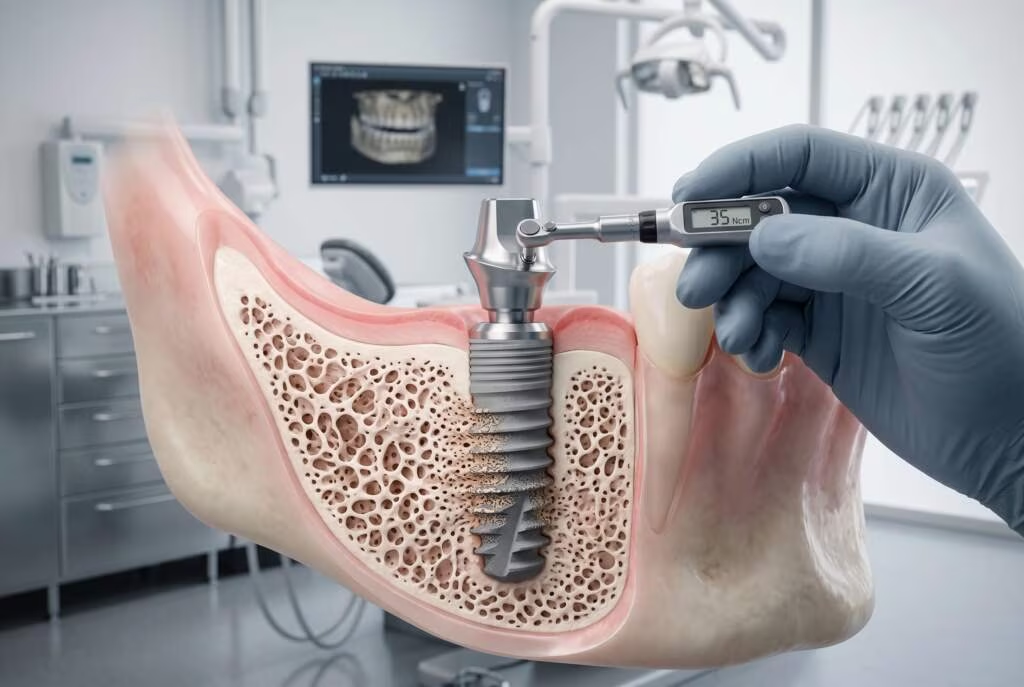
At the four-month mark, torque testing showed zero mobility. Integration was complete. An impression went to the lab for a custom porcelain crown, which was seated two weeks later. Complications? Minimal. Swelling cleared in five days. Three days of prescribed anti-inflammatories handled the discomfort. That was it. The final result was a fully functional, aesthetically matched restoration — the patient called it indistinguishable from her natural teeth. Hard to argue with that outcome.
What this case actually demonstrates is worth spelling out clearly. Socket grafting at the time of extraction preserved ridge anatomy and compressed the overall timeline — skip that step and you often add months. Patient compliance during the osseointegration window wasn’t optional; it was directly tied to whether the implant would succeed at all. And the staged check-ins throughout the dental implant healing stages caught nothing serious in this case — precisely because problems were being looked for before they had room to become irreversible. Total time from extraction to final crown: roughly six months. That’s a realistic benchmark for single-tooth implant cases with prior grafting and standard healing physiology. Not a best-case promise — a documented result.
Conclusion
Dental implant healing isn’t a sprint — it’s a precisely engineered biological marathon where every week of patience pays dividends measured in decades of function. The process breaks down into three hard phases: initial gum closure over the first one to two weeks, osseointegration running three to five months, and final crown placement. Lower jaw implants typically finish one to two months ahead of upper jaw cases — denser bone, faster fusion, simple biology. Modern Haus Dental maps this out clearly, and the timeline holds across virtually every credible clinical source.
Osseointegration is where the real drama unfolds. That 3–6 month window isn’t bureaucratic caution — it’s bone remodeling at the cellular level, and you cannot rush it without paying a steep price. What actually determines success? Bone quality. Surgical precision. Patient compliance. Not the implant brand, not the marketing on the box. Patients who follow dietary restrictions, keep their oral hygiene rigorous, quit smoking for the entire recovery period, and show up to every follow-up appointment clear 95% success rates over ten-plus years. Miss those steps, and complication rates climb 30–50%. A manageable process becomes an expensive, exhausting ordeal.
Crown placement brings its own financial and logistical weight. CT imaging, temporary prosthetics, potential infections — all of it folds into the final cost and timeline. Bone grafting is required in roughly one quarter to one third of cases and can push the full process out to 4–12 months. That sounds daunting. It isn’t an obstacle — it’s a structural investment in a restoration that won’t fail in year three. Every waiting week is load-bearing.
The sharpest predictor of long-term implant success? The quality of the relationship between patient and clinician. Follow instructions precisely. Report anything unusual immediately. Attend every monitoring appointment without negotiation. Advanced imaging keeps refining how healing gets tracked, protocols keep improving — but the biological gold standard of 3–6 months of undisturbed osseointegration hasn’t moved, and it won’t. Trust the process, respect each healing stage, and commit fully. That’s the whole formula.
Free Consultation
Book a free consultation to evaluate healing expectations, bone conditions, and treatment timing.
Useful if you want to understand timing, stages, and budget before starting treatment.
Frequently Asked Questions
What are the main stages of dental implant healing?
Dental implant healing typically occurs in several stages: initial wound healing (first 1–2 weeks), osseointegration where the implant fuses with the jawbone (3–6 months), soft tissue maturation around the implant, and finally the placement of the permanent crown once healing is confirmed.
How long does osseointegration take after a dental implant procedure?
Osseointegration — the process by which the titanium implant bonds with the surrounding jawbone — generally takes between 3 to 6 months. The exact duration depends on factors such as bone density, overall health, and whether bone grafting was performed prior to implant placement.
What can I expect during the first two weeks after getting a dental implant?
During the first two weeks, you may experience swelling, mild bruising, and discomfort around the implant site. The gum tissue begins to close over the implant. It is important to follow a soft-food diet, maintain gentle oral hygiene, and avoid smoking or strenuous activity to support proper initial healing.
What signs indicate that a dental implant is healing properly?
Signs of healthy implant healing include gradually decreasing swelling and discomfort, no persistent bleeding after the first few days, stable positioning of the implant without movement, and healthy pink gum tissue forming around the site. Your dentist will confirm successful osseointegration through X-rays and clinical examination.
What factors can slow down or complicate dental implant healing?
Several factors can negatively affect implant healing, including smoking, uncontrolled diabetes, poor oral hygiene, infection at the implant site, certain medications, and insufficient bone volume. Patients with these risk factors may require additional monitoring or preparatory treatments to improve the chances of successful and timely healing.